

Ankle Sprain Treatment in Los Angeles
A sprain is a tear in a ligament, and it is important to see a specialist to rule out other causes of pain after an inversion or twisting injury of the ankle. Dr. Alexis Dixon, MD, FAAOS, a board-certified orthopaedic foot & ankle surgeon in Marina Del Rey, diagnoses and treats ankle sprains and instability.
Foot & Ankle Conditions
What Is an Ankle Sprain?
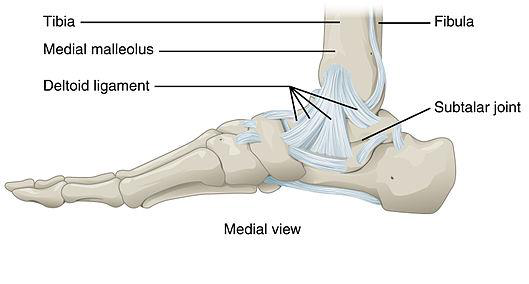
An ankle sprain is a tear in a ligament. Bones are held together by strong, fibrous structures called ligaments, and these ligaments are often injured at the same time with an inversion injury.
Ankle sprains are one of the most common orthopaedic injuries. There are 25,000 ankle sprains every day in the United States, and they make up over 1,000,000 ER visits per year. These are so common that many people never seek medical attention, or only see a primary care physician. For this reason, there are many misconceptions about the treatment and effective methods to alleviate pain. It is important to see a specialist to rule out other causes of pain after an inversion or twisting injury of the ankle.
Get an Accurate Diagnosis
Diagnosis
A set of high-quality weight-bearing (standing) x-rays are required for diagnosis to rule out fracture and to assess the structure of the foot and ankle, as well as a thorough physical examination. Only a weight-bearing x-ray and exam can tell a broken ankle and a sprained ankle apart reliably, and they can occur together. An MRI may be necessary if there is concern for an atypical sprain.
Ankle sprains should be seen by a specialist to rule out a Lisfranc fracture-dislocation (midfoot sprain or fracture), ankle fractures, an osteochondral lesion of the talus, a high ankle sprain, structural abnormalities predisposing to sprains, a calcaneus or talus fracture, and a peroneal retinacular injury.

Symptoms
You should see a doctor for a sprained ankle if pain, swelling, or instability persists. Untreated sprains can become chronic instability or arthritis, and chronic ankle instability is repeated giving-way after prior sprains.
If there is pain in areas outside of the usual ligament locations, an MRI will usually be ordered, as injuries to other ligaments or structures may indicate a more severe injury.
What Causes It?
A sprain is a tear in a ligament, most often with an inversion injury. The most commonly injured ligament in the ankle is the ATFL (anterior talofibular ligament), followed by the CFL (calcaneofibular ligament), and the deltoid ligament. These ligaments are often injured at the same time with an inversion injury. Combined these make up 90% of ankle sprains.
The syndesmosis is a collection of ligaments that hold the bones of the leg together (tibia and fibula). An injury to this area is commonly called a “high ankle sprain” and is a more severe injury, sometimes requiring surgery. Even when non-operative treatment is possible, this takes about twice as long to heal as a standard ankle sprain.
Conservative First, Surgical When Needed
Treatment Options
Most sprains are treated with a CAM boot, ice and anti-inflammatories, and physical therapy to rebuild strength and balance.
Nonsurgical
Immobilization and rest
The use of a tall CAM boot will be recommended while the pain is severe. Ace bandages and lace-up braces are usually inadequate to truly rest a severe sprain. If you are limping or using crutches, walking in a boot will be a better treatment option. The CAM boot may be used for up to six weeks in a standard ankle sprain, and up to twelve weeks in a high ankle sprain.
Ice and anti-inflammatories
The use of NSAIDs and ice can help to decrease the pain. Ice should be placed with a tea towel protecting the skin for no more than 20 minutes per hour. Ice is not advised in patients with neuropathy or any numbness in the feet. Speak to your doctor if you have concerns or contraindications to anti-inflammatories such as Naproxen or Ibuprofen.
Physical therapy
Physical therapy will be recommended to strengthen the muscles that are weak and improve balance. Spraining the ankle results in tearing of nerve fibers that are responsible for proprioception, which is our brain’s ability to know where the foot is in space. Physical therapy has been shown to regenerate and retrain the nerves, which is critical to prevent reinjury.
Surgery
Surgical intervention may be necessary when the sprains are recurrent, and all other non-operative treatments fail.
Why See a Board-Certified Orthopaedic Surgeon (MD)?
It is important to see a specialist to rule out other causes of pain after an inversion or twisting injury of the ankle, and untreated sprains can become chronic instability or arthritis.
Dr. Dixon is a board-certified orthopaedic foot & ankle surgeon, not a podiatrist. Foot and ankle orthopaedic surgeons complete medical school, five years of residency training in orthopaedic surgery, and a yearlong advanced fellowship focused on foot and ankle care. They are the only providers with the depth and breadth of experience to treat the full range of foot and ankle conditions. USC-trained and fellowship-trained in foot & ankle surgery, Dr. Dixon is a Fellow of the American Academy of Orthopaedic Surgeons (FAAOS).
After Treatment
What Recovery Looks Like
The CAM boot may be used for up to six weeks in a standard ankle sprain, and up to twelve weeks in a high ankle sprain. Even when non-operative treatment is possible, a high ankle sprain takes about twice as long to heal as a standard ankle sprain.
To prevent further injury or reinjury, it is best to wait until your balance has been regained and improved. This will require specific balance training as well as core strengthening. Home exercises can accelerate this process through use of a BOSU ball. This is best utilized under the supervision or approval of your physical therapist or physician.
Up to 6 weeks
A standard sprain is managed in a CAM boot while pain is severe.
Up to 12 weeks
A high ankle sprain keeps the boot longer, and healing runs about twice as long as a standard sprain.
Physical therapy
Rebuilds strength and balance once the boot comes off.
Return to activity
Wait until your balance has been regained and improved. BOSU home exercises help, with your therapist’s or physician’s approval.
What Patients Say
Patient Reviews
Patient Questions
Ankle Sprain FAQs

About Your Surgeon
Alexis E. Dixon, MD, FAAOS
Dr. Dixon is a board-certified orthopaedic foot & ankle surgeon practicing in Marina Del Rey, California. USC-trained and named an LA Magazine Top Doctor since 2017, she combines surgical expertise with a conservative-first philosophy, treating the underlying joint and tendon, not just the symptom. She treats ganglion cysts, bunions, Achilles injuries, plantar fasciitis, fractures, and the full range of foot and ankle conditions.
Meet Dr. Dixon →Rolled Your Ankle? Get a Real Diagnosis.
Get an accurate diagnosis and a clear plan from a board-certified orthopaedic foot & ankle surgeon in Marina Del Rey.
Sources
References
The patient handout for this condition draws on the following sources.