

Ankle Fracture Treatment in Los Angeles
An ER or urgent care can diagnose a broken ankle. The ultimate decision should be discussed with the surgeon. Dr. Alexis Dixon, MD, FAAOS, a board-certified orthopaedic foot & ankle surgeon in Marina del Rey, determines whether your fracture is stable or unstable and treats it.
Foot & Ankle Conditions
What Is an Ankle Fracture?
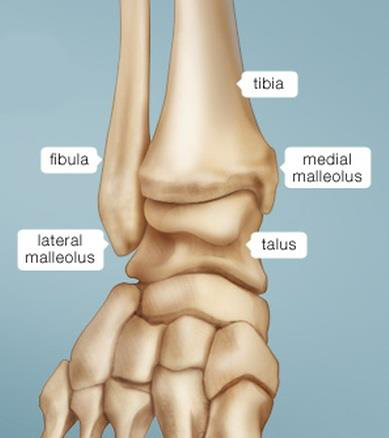
A fracture is the same as a broken bone. Ankle fractures are one of the most common type of fractures. The three major bones of the ankle are the tibia, which comprises the medial aspect in a structure called the medial malleolus, the fibula, which makes the lateral border of the ankle called the lateral malleolus, and the talus.
Fractures differ in severity based on whether they are displaced, meaning whether the fragments have moved relative to one another, or stable. Ankle fractures generally occur from rotational injuries. Sometimes it is possible to have a fracture that you can put weight on.
Get an Accurate Diagnosis
Diagnosis
A set of high-quality weight-bearing (standing) x-rays are required for diagnosis, to evaluate the fracture and to assess the structure of the foot and ankle, as well as a thorough physical examination. The types of x-rays obtained in the primary offices are often inadequate for a specialist, and a different set of x-rays will have to be obtained. Sometimes, an MRI or CT may be necessary if there is concern for a more severe injury or for operative planning.
Many fractures are diagnosed in an emergency room, urgent care center, or primary care office. The role of these facilities is to diagnose the injury and send you to a specialist. They are not intended to treat these long-term, and their recommendations may not be consistent with those from the specialist. You will usually get general instructions to stay off the limb, elevate, and you may be told that surgery is a possibility. The ultimate decision should be discussed with the surgeon.

Symptoms and Types
Dr. Dixon evaluates the symptoms in the office with a thorough physical examination and weight-bearing (standing) x-rays. Ankle fractures range from stable to unstable, and which type you have decides the treatment.
- Stable fracture: There has been little damage to the anatomic structure. It means that the ankle can still bear weight. In general, this means that the pieces have not moved a significant amount. Stable fractures can heal with minimal intervention. They must simply be protected from further injury in a boot or a cast.
- Unstable fracture: The structural integrity of the ankle is compromised. If there is significant displacement of any fragments, this is an indication that a fracture is unstable. For instance, if the fracture needs to be put back into place, it is likely to be pushed out of place again upon initiation of weight-bearing. These fractures frequently require surgery.
- Open fracture: Significant soft tissue injury may result in the bone being exposed to air, known as an open fracture. This is much less common than a closed fracture, where the skin remains intact.
Bones are held together by strong, fibrous structures called ligaments. Many times, instability must be indirectly inferred from x-rays, because the ligaments cannot be seen. If there is a combination of a fracture and a tear of a ligament, this can also become unstable and sometimes requires surgery. This often requires special x-rays called stress x-rays, which may be required prior to a decision about surgery.

Stable or Unstable Decides the Plan
Treatment Options
Immobilization and rest are the first steps for both stable and unstable fractures, except in the case of a more emergent situation. Ace bandages and lace-up braces are not adequate.
Nonsurgical Treatment
A boot or cast will be recommended based on the fracture. If crutches are necessary, Dr. Dixon highly recommends a rolling knee scooter. The CAM boot or cast will be used for a minimum of six weeks and up to twelve. A short boot is not recommended in an ankle fracture.
Surgery
Sometimes surgery is necessary when the fracture is unstable. In order to restore the ankle to its ideal anatomy, the pieces should be put back together under direct visualization, which is called an open reduction. This is done in surgery. Because of the instability, the pieces must be held together in place with screws and plates or pins. This is called internal fixation. Very rarely, there is significant soft tissue injury such as an open fracture that requires temporary fixation to hold a very unstable fracture in place while the soft tissue can rest. In that first surgery, a minimal number of incisions are made to allow the skin to heal. A temporary fixator is placed to hold the pieces together indirectly as a frame. This is only done for as long as is necessary until the skin is healthy enough to withstand a more involved surgery of open reduction and internal fixation.
Ice, Anti-Inflammatories, and Healing
Ice should be placed with a tea towel protecting the skin for no more than 20 minutes per hour. Ice is not advised in patients with neuropathy or any numbness in the feet. Speak to your doctor if there is concern for contraindications to anti-inflammatories such as naproxen or ibuprofen. A healthy diet, abstinence from any nicotine products, and appropriate vitamin supplementation are critical to supply the bone with the nutrients and oxygen it needs to heal. Dr. Dixon recommends Calcium (1200mg) and Vitamin D3 (2000 to 5000iu) supplementation to maximize results.
Why See a Board-Certified Orthopaedic Surgeon (MD)?
Ankle injuries, especially unstable fractures, are time-sensitive, and the choice between non-surgical and surgical treatment shapes recovery and return to sport. A board-certified, fellowship-trained orthopaedic foot & ankle surgeon offers the full range of options and the surgical expertise if you need it. Foot and ankle orthopaedic surgeons complete medical school, five years of residency training in orthopaedic surgery, and a yearlong advanced fellowship focused on foot and ankle care. It is highly recommended to always consult with a foot and ankle orthopaedic surgeon before planning surgery in the region.
After Treatment
What Recovery Looks Like
The CAM boot or cast will be used for a minimum of six weeks and up to twelve. Physical therapy will be used to strengthen the muscles that are weak and improve balance after immobilization is complete. This will help to accelerate recovery once the bone has healed. To prevent further injury or reinjury, it is best to wait until your balance has been regained and improved. This requires specific balance training as well as core strengthening. Home exercises can be accelerated with a BOSU to gain balance after clearance for bearing weight out of a boot. This should be supervised or approved by your physical therapist or physician.
Weeks 1 to 6
A CAM boot or cast for a minimum of six weeks, and up to twelve, depending on your fracture.
Once healed
Physical therapy strengthens the muscles that have weakened and improves balance.
Out of the boot
Home balance work, advanced with a BOSU once you are cleared to bear weight, supervised or approved by your therapist or physician.
Return to activity
After your balance has been regained and improved through balance training and core strengthening.
What Patients Say
Patient Reviews
Patient Questions
Ankle Fracture FAQs

About Your Surgeon
Alexis E. Dixon, MD, FAAOS
Dr. Dixon is a board-certified orthopaedic foot & ankle surgeon practicing in Marina Del Rey, California. USC-trained and named an LA Magazine Top Doctor since 2017, she combines surgical expertise with a conservative-first philosophy, treating the underlying joint and tendon, not just the symptom. She treats ganglion cysts, bunions, Achilles injuries, plantar fasciitis, fractures, and the full range of foot and ankle conditions.
Meet Dr. Dixon →Broke Your Ankle? Get a Specialist's Plan.
If you have an ankle fracture, get an accurate diagnosis and a clear plan from a board-certified orthopaedic foot & ankle surgeon in Marina del Rey.
Sources
References
The patient handout for this condition draws on the following sources.